Iranian Painters: From Tradition to Modernity
Jul 17, 2025

Irani World
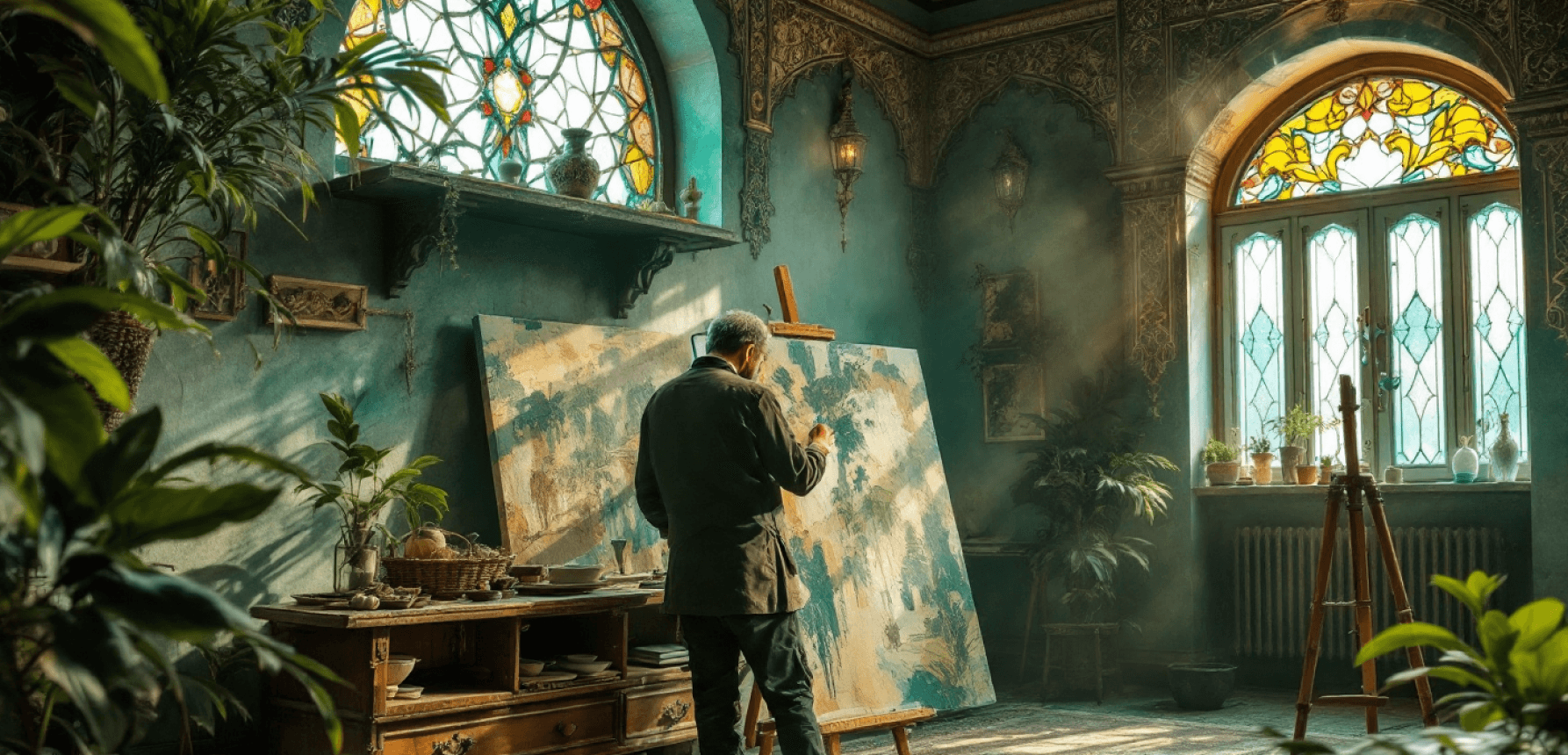
For centuries, the art of painting in Iran has reflected the country’s rich cultural soul — a unique blend of spirituality, poetry, and visual beauty. From the delicate strokes of ancient miniatures to the bold expressions of modern canvases, every Iranian painter has carried a story shaped by history, tradition, and emotion. Iranian art has never been just about color and form; it has always been a mirror of identity, philosophy, and resilience.
In the early centuries, Iranian painters were known for their mastery of miniature art — detailed, symbolic, and deeply connected to Persian literature. These artworks often illustrated epic poems like the Shahnameh or Khamsa of Nizami, celebrating heroes, mysticism, and the beauty of nature. But as time passed and global influences reached Iran, a new generation of painters began to look beyond traditional forms. They sought ways to express individuality and modern social realities while still honoring their cultural roots.
The transformation of Iranian painting, especially during the 20th century, represents a fascinating dialogue between tradition and modernity. Artists like Kamal-ol-Molk bridged classical Persian aesthetics with European realism, while later figures such as Sohrab Sepehri and Hossein Zenderoudi redefined what it meant to be an Iranian painter in a rapidly changing world.
Today, Iranian painters continue to evolve — blending ancient symbolism with contemporary ideas, exploring digital art, abstraction, and identity politics. Their work not only connects Iran’s artistic past with its modern identity but also positions them among the most distinctive voices in global contemporary art.
The Origins of Iranian Painting
The story of Iranian painting begins long before the concept of “modern art” ever existed. It is deeply rooted in Iran’s ancient civilization — a land where color, poetry, and spirituality have always been intertwined. The earliest Iranian painters weren’t just artists; they were storytellers, philosophers, and historians who translated the unseen world into delicate patterns and symbolic figures.
The Early Persian Miniatures
One of the earliest and most celebrated forms of Iranian art is the Persian miniature. These small, intricate paintings were more than visual decoration — they were windows into a world of imagination and culture. Iranian painters working in this tradition mastered the art of precision, using fine brushes and natural pigments to depict stories from Persian poetry, mythology, and everyday life.
Their compositions followed a rhythm that felt almost musical — with balanced geometry, vibrant color harmony, and a poetic sense of movement. Each piece was created not only to please the eye but to touch the soul.
The Influence of Islamic Art and Calligraphy
As Islam became a dominant cultural force in Iran, it left a profound mark on visual art. Iranian painters began integrating calligraphy, geometry, and symbolism into their works. Instead of focusing solely on human forms, many artists turned to nature, abstract motifs, and spiritual themes.
This fusion gave birth to a new kind of artistic identity — one that expressed faith, philosophy, and beauty all at once. A true Iranian painter was no longer just an illustrator; he was a seeker of meaning through form and color.
Key Figures in Traditional Persian Painting
Among the legendary names in traditional Iranian art stands Reza Abbasi, whose works in the 16th and 17th centuries set new standards for grace and emotional depth. His figures were soft yet powerful — often reflecting moments of meditation, love, or solitude.
Centuries later, Kamal-ol-Molk emerged as a bridge between classical Persian miniature art and European realism. Through his precise technique and academic approach, he paved the way for Iran’s entry into the modern era of painting.
The Transition to Modern Iranian Art
As the world began to change in the late 19th and early 20th centuries, so did the vision of the Iranian painter. Iran, like many other nations, found itself at a crossroads — torn between preserving a rich cultural past and embracing the rapid modernization that came with contact with the West. This period marked a turning point in Iranian painting, where the boundaries of tradition were tested and redefined.
Western Influence and the Search for a New Identity
When Iranian students began studying art in Europe, especially in France and Italy, they returned home with a fresh perspective. They brought with them techniques of realism, perspective, and anatomy that had never been a focus of traditional Persian art. Yet rather than simply copying Western styles, these artists sought to adapt them — to express Iranian stories through a modern lens.
Kamal-ol-Molk became one of the earliest figures to embody this transition. He blended European realism with the poetic elegance of Persian culture, creating a style that felt both global and deeply Iranian. His students later carried his vision into the modern era, establishing the foundations of Iran’s art education system.
The Rise of Art Schools and Creative Movements
By the mid-20th century, Tehran and other major cities had become hubs of artistic experimentation. The School of Fine Arts, established under Kamal-ol-Molk’s influence, trained a new generation of painters who were eager to explore abstraction, symbolism, and expressionism.
For the first time, Iranian painters were painting not only royal portraits or religious themes, but also urban life, emotions, and social change. Their canvases began to reflect the complexity of modern Iranian identity — caught between nostalgia for the past and the challenges of the future.
The Birth of Modern Expression in Iran
The 1950s and 60s marked the true birth of modern Iranian painting. Artists like Hossein Zenderoudi, Marcos Grigorian, and Sohrab Sepehri began to redefine what art could mean. They used symbols from Persian calligraphy, mystical poetry, and everyday life to build a visual language that was at once modern and timeless.
Each Iranian painter during this era became a storyteller of transformation — expressing freedom, introspection, and resilience through color and form. The art of Iran was no longer confined to palaces and manuscripts; it had entered galleries, streets, and global conversations.
Modern and Contemporary Iranian Painters
The evolution of the Iranian painter did not stop with modernization — it blossomed into a new wave of creativity and self-expression. As Iran entered the second half of the 20th century, artists began to use painting not just as decoration or storytelling, but as a form of identity, philosophy, and protest. This was a time when Iranian art found its voice in the modern world while keeping its soul rooted in centuries of tradition.
Sohrab Sepehri – The Poet-Painter
Few artists have captured the quiet spirituality of Iran like Sohrab Sepehri. Known both as a poet and a painter, Sepehri’s minimalist style combined elements of Zen philosophy with the mysticism of Persian thought. His landscapes — often soft, meditative, and full of empty space — invite the viewer to breathe, reflect, and reconnect with nature.
He once said that painting, like poetry, is a way to “see the unseen.” Sepehri represents the Iranian painter who speaks through silence — whose art transcends words yet tells a story deeper than any language.
Hossein Zenderoudi – Symbolism and Spiritual Geometry
Hossein Zenderoudi is another name that reshaped the identity of Iranian painting. His works combine calligraphy, sacred geometry, and cultural symbols, turning traditional elements into bold, modern compositions. Zenderoudi’s art reflects the spiritual side of Iran — mystical, mathematical, and deeply personal.
He and other members of the Saqqakhaneh movement created a bridge between faith and modern art, proving that an Iranian painter could be both contemporary and spiritual at once.
Farideh Lashai – A Voice of Modern Expression
In a field once dominated by men, Farideh Lashai stood out for her sensitivity, courage, and innovation. Her paintings often blended abstraction with emotion, exploring themes of memory, silence, and transformation. Lashai’s art evolved with time — from vivid color compositions to experimental installations that merged painting and video art.
She represents a generation of Iranian painters who used creativity as resistance, turning personal experience into universal meaning.
Other Notable Iranian Painters
Beyond these figures, Iran continues to produce artists who challenge boundaries and redefine beauty. From Shirin Neshat’s politically charged visual works to Reza Derakshani’s colorful symbolism, the new generation of Iranian painters carries the legacy of centuries — using modern tools, digital mediums, and global platforms to share their vision with the world.
Today, an Iranian painter is not limited by geography or style. Whether working in Tehran, Paris, or New York, these artists continue to tell the same timeless story — one of resilience, identity, and the eternal dialogue between tradition and modernity.'
Iranian Painters on the Global Stage
Over the past few decades, the voice of the Iranian painter has reached far beyond the borders of Iran. Through exhibitions, collaborations, and international recognition, Iranian artists have become ambassadors of a culture that is both ancient and contemporary. Their work stands as proof that creativity can flourish even in the face of limitation — and that art, when born from truth, always finds its way to the world.
Exhibitions and International Recognition
From Paris and London to New York and Tokyo, Iranian paintings have captured the attention of global audiences. Major museums — including the Tate Modern, the Metropolitan Museum of Art, and the Centre Pompidou — have showcased works by modern and contemporary Iranian painters.
These exhibitions not only highlight the technical mastery of Iranian artists but also open windows into Iran’s unique blend of spirituality, symbolism, and emotion. Viewers around the world are often struck by how Iranian painters weave ancient Persian aesthetics into modern narratives — a harmony of East and West that feels timeless.
The Role of Iranian Diaspora Artists
Many Iranian painters who left the country after the 1979 Revolution continued their creative journeys abroad. Living in new cultures gave them both freedom and longing — a duality that shaped their art in profound ways. Artists like Shirin Neshat, Monir Farmanfarmaian, and Kour Pour explored themes of identity, exile, and belonging through innovative mediums.
Their success abroad helped to redefine the image of the Iranian painter — not as a regional artist, but as a global storyteller. Through their works, they have shown that art transcends geography, politics, and even language.
How Iranian Painters Influence Global Contemporary Art
Today, the influence of Iranian painters can be felt in galleries, art fairs, and online spaces around the world. Their ability to mix tradition with innovation, mysticism with modernity, and personal stories with universal themes has inspired artists of all backgrounds.
By integrating Persian motifs, calligraphy, and poetic symbolism into modern techniques, Iranian painters have contributed to a broader conversation about identity and cultural exchange in contemporary art.
In many ways, the journey of the Iranian painter mirrors Iran itself — a country balancing memory and change, heritage and progress. And as the world grows more connected, their voices continue to echo louder than ever, reminding us that true art knows no borders.
The Future of Painting in Iran
The future of Iranian art is being written right now — on digital screens, on the walls of new galleries, and in the hearts of a new generation of dreamers. Today’s Iranian painter stands at a fascinating intersection: between tradition and technology, spirituality and self-expression, local identity and global connection.
Young Artists and Digital Art Trends
The new generation of Iranian painters is redefining creativity. Many young artists are turning to digital painting, NFTs, and mixed media, combining classic techniques with modern tools. Through social media, they can now reach global audiences instantly — something unimaginable just a few decades ago.
But even as they experiment with modern forms, their art often carries traces of Persian heritage — the intricate patterns, the poetic metaphors, and the sense of emotional depth that have always defined Iranian creativity.
These young Iranian painters are fearless. They question social norms, explore identity, and use art as a language for truth. Some paint in small studios in Tehran; others create digital masterpieces from exile — yet all are connected through a shared artistic DNA rooted in centuries of beauty and resilience.
The Growing Presence of Women in Iranian Painting
One of the most inspiring changes in recent years is the rise of women painters in Iran. Artists like Farideh Lashai, Ghazaleh Hedayat, and Neda Razavipour have broken barriers and brought new perspectives to the art scene.
Their work often explores themes of silence, identity, and emotion — giving voice to experiences long overlooked. In many ways, the modern Iranian painter is as likely to be a woman as a man, using art as both expression and empowerment.
Challenges and Opportunities Ahead
Despite censorship, economic struggles, and social limitations, Iranian painters continue to create with passion and hope. Art in Iran has always been a form of resistance — a way to survive, to speak, and to dream.
As technology evolves, the future may bring more opportunities for collaboration, international exposure, and creative freedom. The challenge for every Iranian painter will be to stay true to their roots while embracing innovation — to continue painting stories that connect the ancient spirit of Iran with the voice of the modern world.
Conclusion
The story of the Iranian painter is, in many ways, the story of Iran itself — a timeless dance between tradition and transformation. From the ancient masters of Persian miniature to the bold innovators of the digital age, every generation of artists has added a new layer to the canvas of Iranian identity.
Through war, change, censorship, and rebirth, Iranian painters have never stopped creating. Their art carries a quiet power — a blend of spirituality, emotion, and intellect that reflects both the beauty and the struggle of being Iranian. Each brushstroke tells not just a story of an individual artist, but of a civilization that has turned beauty into survival and imagination into resistance.
Today, the world is finally listening. Iranian painters are no longer confined by borders; their work speaks in the universal language of emotion and truth. Whether painted on paper, canvas, or screen, their art reminds us that creativity knows no boundaries — that even in silence, the Iranian painter continues to speak with color, soul, and light.
Category