Xerxes the Great: The Architect King of the Achaemenid Empire
Feb 27, 2026

Irani Bio
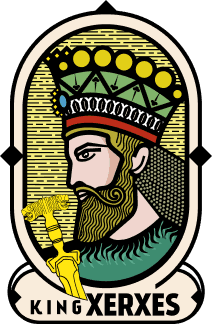
Xerxes I
The Majestic Builder and the Hero of the West
Xerxes I, the son of Darius the Great and Atossa (daughter of Cyrus), ascended the throne in 486 BC. His reign represents the peak of Achaemenid architectural splendor and the ultimate test of Persian military logistics. While Western historical tradition often portrays him as a "despotic" ruler due to his invasions of Greece, Persian records and modern archaeological findings reveal a sophisticated monarch dedicated to the religious unity of his realm and the completion of the most ambitious building projects in human history.
Lineage and the Choice of Succession
Although Xerxes was not Darius's eldest son, he was the first born after Darius became king, and more importantly, he was a direct grandson of Cyrus the Great. This dual lineage gave him an unquestionable legitimacy. His rise to power was smooth, and he immediately proved his capability by swiftly suppressing major revolts in Egypt and Babylon, reinforcing the central authority that his father had established.
The Invasion of Greece: Reality vs. Hellenic Narrative
The defining event of Xerxes' reign was the massive expedition into Greece in 480 BC. Greek historians like Herodotus depicted this as a clash of civilizations, focusing on battles like Thermopylae and Salamis. However, modern military historians view the campaign as a masterpiece of ancient logistics, involving the construction of a double bridge across the Hellespont and a canal through the Athos peninsula—engineering feats that were unparalleled in the ancient world.
Architect of the Gate of All Nations
Xerxes was the primary builder of Persepolis, completing the work started by his father and adding his own monumental vision. His most famous contribution is the "Gate of All Nations," where travelers from every corner of the empire were welcomed by colossal lamassu statues. His inscriptions there reflect a message of imperial peace and divine protection, showcasing a ruler who viewed himself as a guardian of global order.
The "Daiva" Inscription and Religious Policy
A significant point of debate is Xerxes' religious policy, particularly the "Daiva Inscription" where he claims to have destroyed the sanctuaries of "false gods" (Daivas). Older scholarship interpreted this as religious intolerance. However, modern critical analysis suggests this was a political response to rebellions in provinces like Babylon. By promoting the worship of Ahura Mazda, Xerxes was using religion as a tool for political centralization and moral order.
Administrative Continuity and Economic Stability
Despite the heavy costs of the Greek wars, the empire remained economically vibrant under Xerxes. He maintained the Satrapy system and the Royal Road network. Archaeological evidence from Persepolis’s treasury shows a highly organized bureaucracy that managed the payment of thousands of diverse workers
from across the empire, proving that the Achaemenid state remained a stable and functioning machine throughout his 21-year rule.
The Palace Intrigues and Death
The later years of Xerxes’ reign were marked by the growing influence of court officials. In 465 BC, he was assassinated in his bedchamber by Artabanus, the commander of the royal bodyguard. This violent end marked a transition in Achaemenid history, where the internal politics of the palace began to play an increasingly decisive role in the fate of the monarchy, leading to the rise of his son, Artaxerxes I.
Legacy: From Tragic Figure to Imperial Icon
Xerxes' legacy has long been a victim of "Orientalist" bias in Western literature. Yet, to the Persian world, he was the King who upheld the dignity of the empire at its zenith. He was a man of grand scale—in his buildings, his armies, and his vision. Today, he is remembered as the architect who gave the Achaemenid Empire its most enduring visual identity, ensuring that the glory of Parsa would be remembered for millennia.