Haft-Seen: Symbolic Iranian New Year Table & Cultural Significance
Mar 21, 2026
Irani News
Haft-Seen: The Symbolic Heart of Nowruz and Iranian New Year Traditions
Introduction: Beyond a Table, a Cultural Language
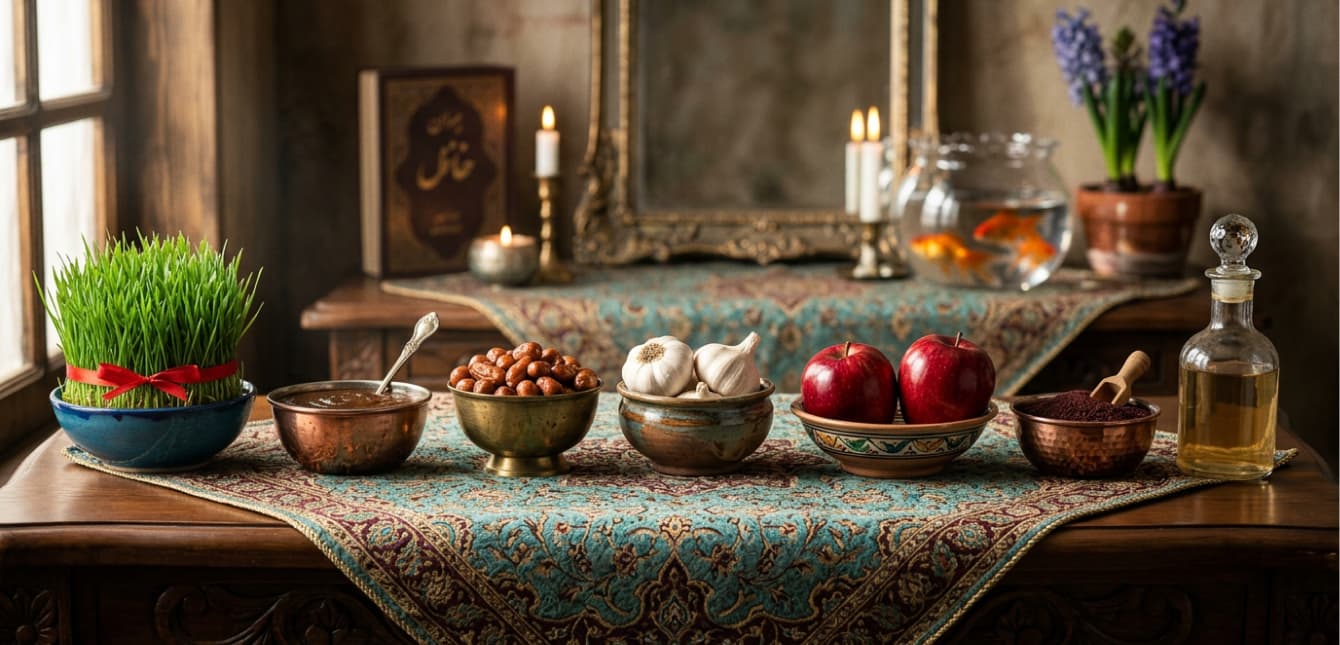
Haft-Seen is one of the most recognised and profound elements of Nowruz, the Iranian New Year. At first glance, it may appear to be just a beautifully arranged table with symbolic items, but in reality, Haft-Seen is a cultural “language” shaped over thousands of years. Each item on this table carries a unique meaning, reflecting values such as life, renewal, health, prosperity, and patience. For millions of people celebrating Nowruz in Iran and around the world, Haft-Seen is not merely a tradition but a ritual that connects the past, present, and future. In today’s world, where cultural identity plays a critical role in shaping societies, Haft-Seen remains a symbol of continuity, resilience, and hope.
What is Haft-Seen?
Haft-Seen refers to a traditional arrangement of seven symbolic items, each beginning with the Persian letter “S” .س These items are placed on a decorated table during the final days of the year to celebrate the arrival of spring and the new year.
The number seven holds special significance in Iranian culture, symbolising perfection, balance, and harmony in the universe. Therefore, including seven items in the Haft-Seen is both deliberate and meaningful.
Traditionally, family members gather to prepare the Haft-Seen, turning the process into a cultural and familial experience. This table is usually displayed in a prominent place at home and remains the centrepiece of celebrations and visits during Nowruz.
The Classic Haft-Seen Items
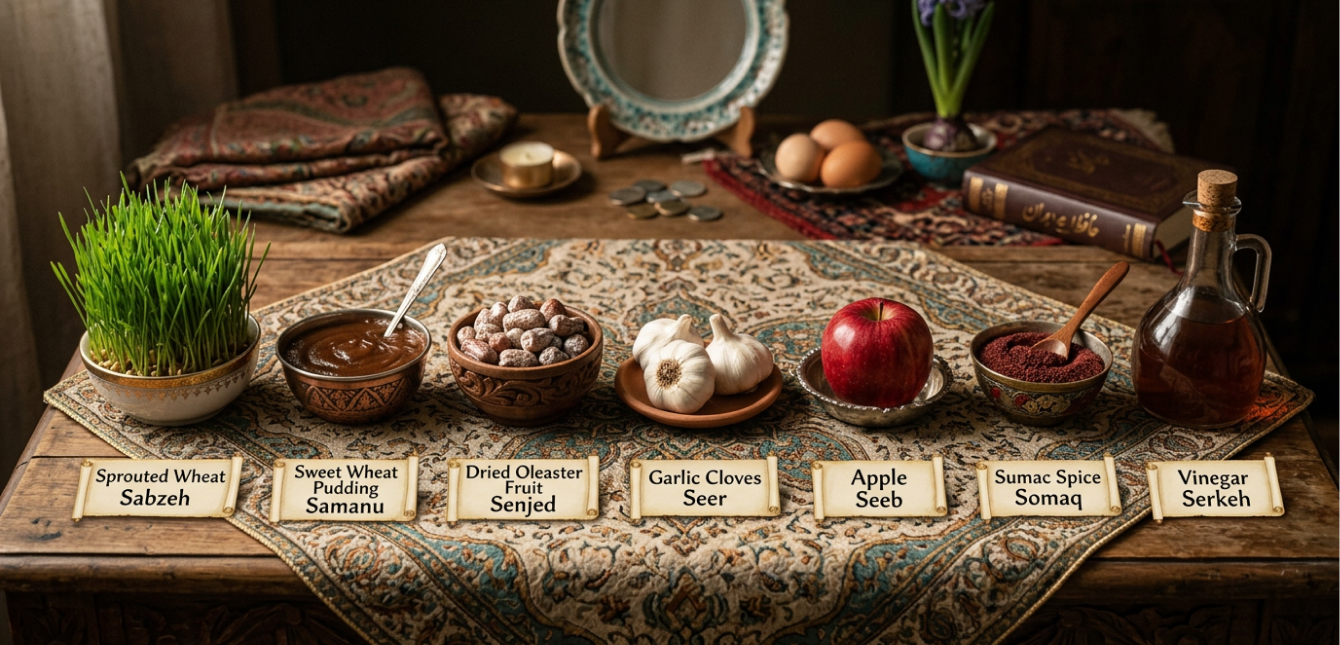
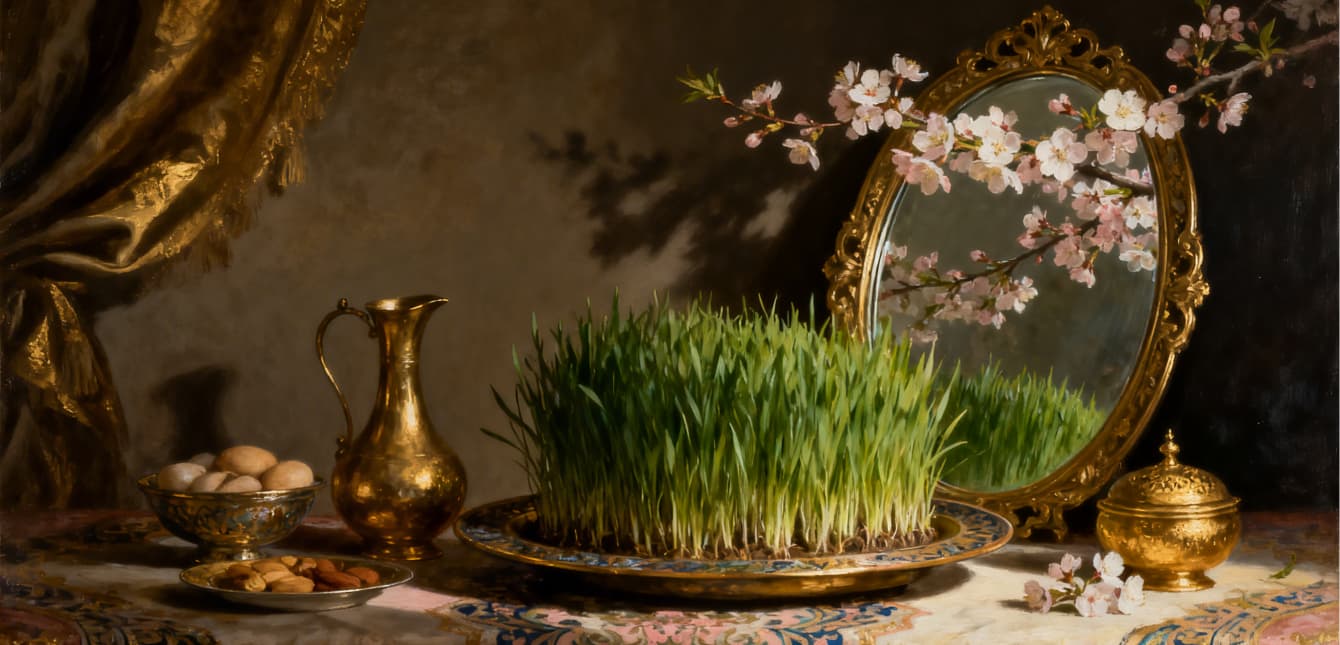
- Sabzeh (sprouted wheat or greens, symbolising rebirth and growth)
- Samanu (sweet wheat pudding, symbolising strength and abundance)
- Senjed (dried oleaster fruit, symbolising love and wisdom)
- Seer (garlic cloves, symbolising health and protection)
- Serkeh (vinegar, symbolising the passage of time and maturity)
- Seeb (apple, symbolising beauty and well-being)
- Somaq (sumac spice, symbolising sunrise and patience)
Each of these items contributes to a broader narrative of life, growth, and balance.
Together, these items create a complete story of life, growth, and balance.
Additional Elements in Haft-Seen
Many families also include additional symbolic items to enhance the table’s beauty and meaning:
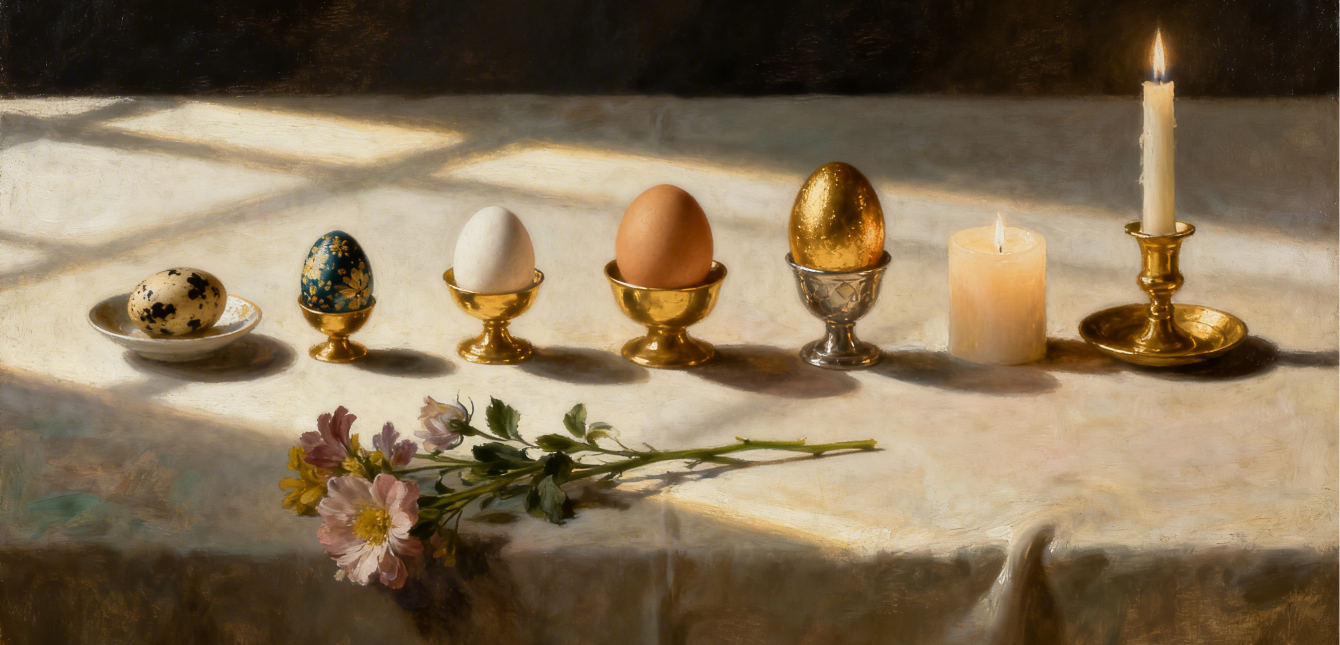
- Aayeneh (mirror, symbolising self-reflection) Sham’ (candles, symbolising light and awareness) Mahi (goldfish, symbolising life and movement)
- Tokhm-e Morgh-e Rangin (colored eggs, symbolising creativity and new life) Sekkeh (coins, symbolising wealth and prosperity)
- Gol-e Sonbol (hyacinth flowers, symbolising the arrival of spring)
Haft-Seen in Modern Times
Today, Haft-Seen has evolved while retaining its essence. Modern styles, especially among younger generations, have popularised minimalist and creative designs. Social media plays a significant role in sharing these traditions, turning Haft-Seen into a global phenomenon.
Despite modernisation, its core values remain intact, helping preserve and strengthen cultural and identity bonds among all Iranians.
Haft-Seen and Cultural Identity
Haft-Seen is one of the most powerful cultural symbols in Iran, reflecting not only a traditional ritual but also the collective and historical identity of Iranians. This traditional table serves as a bridge between generations, providing an opportunity to pass down values, beliefs, and cultural lessons from the past to the present.
Each item on the Haft-Seen has a specific meaning, but together they present a holistic view of Iranian worldview, emphasising harmony between nature, humans, and ethical values. Sabzeh, Samanu, Seeb, Seer, Senjed, Somaq, and Serkeh are not only visually appealing but also convey centuries-old knowledge and wisdom.
Haft-Seen also strengthens social connections. Preparing the table, participating in rituals, family visits, and even sharing photos online enhance a sense of belonging and cultural unity. It acts as a cultural bridge, keeping a sense of heritage and shared identity alive.
Furthermore, Haft-Seen serves as an informal educational tool. Parents and elders explain the symbolism of each item to children, transmitting concepts such as patience, love, wisdom, and moral values. This cultural transmission ensures that Iranian identity is preserved and reinforced across generations.
Ultimately, Haft-Seen is a symbol of continuity, resilience, and the adaptability of Iranian culture. Even in the modern era, when many traditions face pressures from globalisation and lifestyle changes, Haft-Seen remains a point of cultural connection and a reminder of collective Iranian identity.
Why Haft-Seen Matters Today
Haft-Seen today is more than just an old tradition; it represents values, identity, and social cohesion that have endured for centuries.
Preserving Cultural Identity
In a rapidly changing world, Haft-Seen continues to stand as a stable cultural symbol. It reminds people of past traditions while allowing them to maintain their identity in any environment. For younger generations, Haft-Seen is a bridge between past and present, an opportunity to learn cultural values and beliefs.
Fostering Social Cohesion
Haft-Seen is a collective experience. Even when people cannot gather physically, the symbols and rituals strengthen a sense of belonging and community. Sharing Haft-Seen photos and discussing its elements online fosters cultural solidarity.
Inspiring Hope and Renewal
A fundamental philosophy of Haft-Seen is the concept of renewal and the life cycle. These symbols remind us that life is always moving and regenerating, and even in challenging circumstances, there is an opportunity for growth and transformation.
Emotional and Psychological Value
Haft-Seen also has notable psychological and emotional benefits. Observing the colors, symbols, and participating in family rituals brings a sense of calm, joy, and well-being, offering a chance to focus on beauty and connection with loved ones.
Conclusion
Today, Haft-Seen transcends being just a traditional table. It symbolises identity, culture, hope, cohesion, and education, playing a crucial role in maintaining connections across generations and communities. Even in modern, globalised settings, Haft-Seen continues to inspire and remain meaningful, showing that traditions can be alive, dynamic, and relevant to contemporary life.
More Popular Blogs

Iranians: A Timeless Culture, Warm Hearts, and an Unbreak
Discover the rich social culture of Iranians—warm-hearted, generous, united, and shaped by thousands of years of history, tradition, and shared identity.

WPS
11/08/2025
11 min read
Nowruz 1405 in Iran | Full Analysis of Society, Economy, and Hope
A comprehensive analysis of Nowruz 1405 in Iran, covering ancient roots, current challenges, resistance economy, and public hope for the future.
Irani News
03/20/2026
8 min read
Category
The Most Active
Riv Design
Company